Quick answer: To use a soundbar with IPTV on a Smart TV, identify whether the IPTV player runs on the TV or on an external streaming device, choose one audio path, and test the TV speakers before adding the soundbar. Then connect the soundbar using a documented HDMI, optical, or compatible wireless method, select the matching TV output, and confirm that volume is controlled by the intended remote. Change one setting at a time so you can separate a soundbar setup issue from an IPTV playback issue.
IPTV does not have one universal audio connection. The sound travels from the content source through the player and device, then to the television and sound system. A Smart TV app may send sound through the TV’s audio output, while an external box may use a different path. When the picture works but sound is missing, delayed, or coming from the wrong speaker, the best first step is to map the path rather than reinstall the player.
Understand the IPTV soundbar signal path
There are three common arrangements. The player may run directly on the Smart TV and the soundbar may connect to the TV. The player may run on an external streaming box connected to the TV, with the soundbar still connected to the TV. Or the external device may connect through a soundbar before the signal reaches the TV. Each arrangement can work when the ports and output modes are compatible, but the settings are not identical.
Write down where the player runs, which HDMI input is used, whether the soundbar uses HDMI ARC/eARC, optical, or another method, and which remote changes volume. Our IPTV devices guide helps compare the roles of Smart TVs, streaming boxes, and players.
Before connecting a soundbar
Confirm the source and plan
Use content access and devices that you are authorized to use in your location. A soundbar improves the listening path, but it does not change the plan or source. Review the IPTV pricing and subscription information if you need to confirm device support or ask a plan question.
Record the working TV setup
First play a permitted item through the TV speakers. Confirm that the video and audio work before disconnecting anything. Note the player, device, TV input, and current audio output. Do not photograph a settings screen that reveals usernames, passwords, private playlist URLs, or activation details.
How to set up a soundbar for IPTV on a Smart TV
Step 1: Choose one connection method
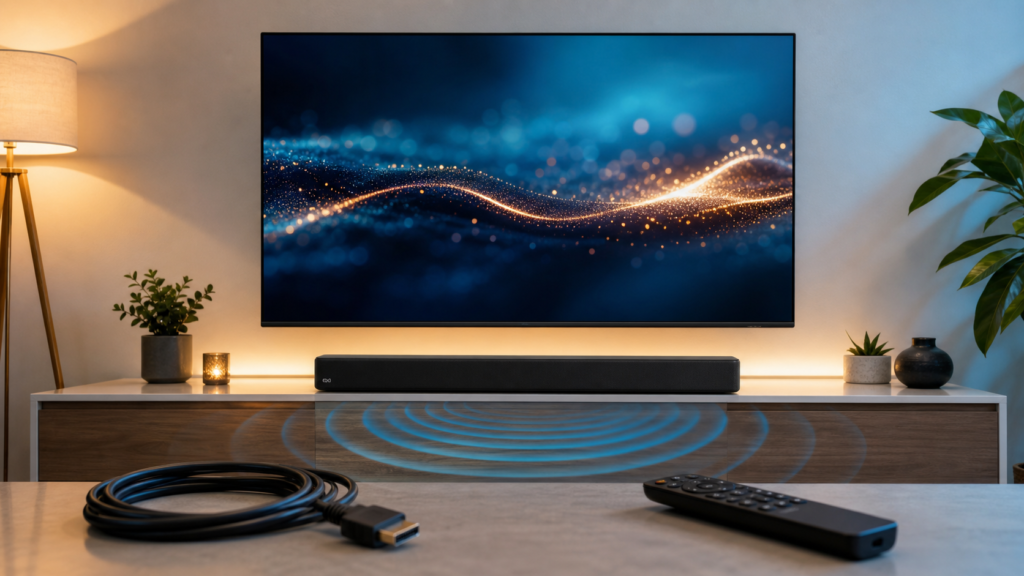
Use the connection method supported by the TV and soundbar documentation. HDMI ARC or eARC can allow the TV to send audio to the soundbar and may support volume control through the TV remote. Optical is another common method, although control features can differ. Wireless connections may be convenient but can introduce pairing and output-selection variables. Start with one path rather than connecting several at once.
Step 2: Connect the soundbar with the devices powered down if recommended
Follow the device instructions for connecting cables. Use the matching TV port for ARC/eARC when that feature is required, and check that the cable is fully seated. If you use optical, remove any protective caps and make sure the cable is oriented correctly. Avoid forcing plugs or using damaged cables.
Step 3: Select the TV audio output
Open the TV sound settings and choose the external audio output that matches the connection. The wording varies by TV. If the TV remains set to internal speakers, the soundbar may stay silent even though the cable is connected. Test a TV menu sound or another permitted source before opening the IPTV player.
Step 4: Test the IPTV player
Open the player and test one known working item. Confirm that audio comes from the soundbar, that the TV shows the expected output, and that the remote changes volume in the intended way. If the soundbar works with other apps but not IPTV, review the player’s audio track and output settings. If every source is silent, return to the TV and soundbar connection.
Step 5: Review audio format settings conservatively
Some TVs and soundbars offer automatic, PCM, passthrough, or surround output options. When compatibility is uncertain, use the manufacturer’s recommended or automatic setting for comparison. A format that the soundbar cannot decode can create silence or intermittent sound. Change one option, test the same item, and restore the original setting if it does not help.
Step 6: Confirm volume and remote behavior
Test volume up, volume down, mute, and power. Some setups require a remote-control pairing or HDMI control setting. Do not assume that the IPTV player remote controls the soundbar. Record which remote works and explain that arrangement to other household users.
Common soundbar problems with IPTV
The TV speakers work but the soundbar is silent
Check the selected output, soundbar input, cable seating, and whether the soundbar is muted. Test another permitted source. If the TV output is correct but only IPTV is silent, inspect the player audio track and format.
The sound comes from both TV and soundbar
The television may be configured to use internal and external speakers at the same time. Review the TV sound output and choose the intended arrangement. A slight echo can also come from processing delay between speakers.
Audio is delayed after connecting the soundbar
Check whether the soundbar or TV offers a small audio-sync adjustment. Use a consistent test item and make one change at a time. If the delay appears only in IPTV, note the player and device; if it appears everywhere, focus on the TV and soundbar path.
The picture disappears after connecting through the soundbar
That can indicate an HDMI path or input issue rather than an IPTV issue. Test the streaming device directly through the TV, then compare the result. Do not change the subscription because of an unverified cable or port problem.
When to contact IPTV support
Contact support when the player is compatible but audio works on TV speakers and fails only through the soundbar, when a specific audio track behaves differently, or when you need help documenting the device path. Use the IPTV support hub and the official WhatsApp or Telegram buttons. Share the player, device, TV input, soundbar connection, and non-sensitive tests. Never send passwords publicly.
FAQ
Can I connect a soundbar directly to an IPTV player?
It depends on the player and device outputs. Many setups send sound through the TV, but follow the documentation for the exact hardware path.
Why does the soundbar work with other apps but not IPTV?
The IPTV player may use a different audio track or output format. Check the player audio options and compare one permitted item.
Should I use passthrough mode?
Use automatic or the recommended mode when compatibility is uncertain. Change one setting and test before choosing a more advanced output.
What should I send support?
Send the player, device, TV input, soundbar connection, symptom, and steps tested. Do not send passwords or private playlist URLs.
Final checklist
Map the player and audio path, confirm TV speakers first, choose one soundbar connection, select the matching output, test the IPTV player, review audio format, and verify remote behavior. Keep audio setup separate from subscription and network troubleshooting. For compatible setup guidance, review the IPTV service information and contact official support.