Quick answer: A more accessible IPTV setup usually comes from four small changes: turn on subtitles when available, increase text or display size, choose a high-contrast interface when the device offers it, and simplify remote navigation with a short Favorites list. The best settings depend on the television, operating system, and IPTV player. Change one setting at a time and test it from the normal viewing distance.
Accessibility is not limited to one type of viewer. Larger menu text helps someone with reduced vision; subtitles help viewers who are hard of hearing or watching in a noisy room; clear navigation helps children, older adults, and guests; and a well-placed streaming device can reduce remote and HDMI confusion. An IPTV setup should be easy to operate without exposing account credentials or requiring constant technical help.
Which IPTV accessibility settings matter most?
Subtitles and captions
Subtitles or captions may be controlled by the player, the device, or the content source. If a program does not provide a subtitle track, the player cannot always create one. Look for subtitle, caption, audio track, or language options while a supported video is playing. Keep in mind that the menu may be different for live TV and on-demand content.
Text size and display scaling
Many televisions and streaming devices offer text size, magnification, or display scaling. Increasing the size can make menus easier to read, but it may also hide buttons or reduce how many channel names appear on screen. After changing it, test the home screen, playlist, settings, and playback controls.
Contrast and color
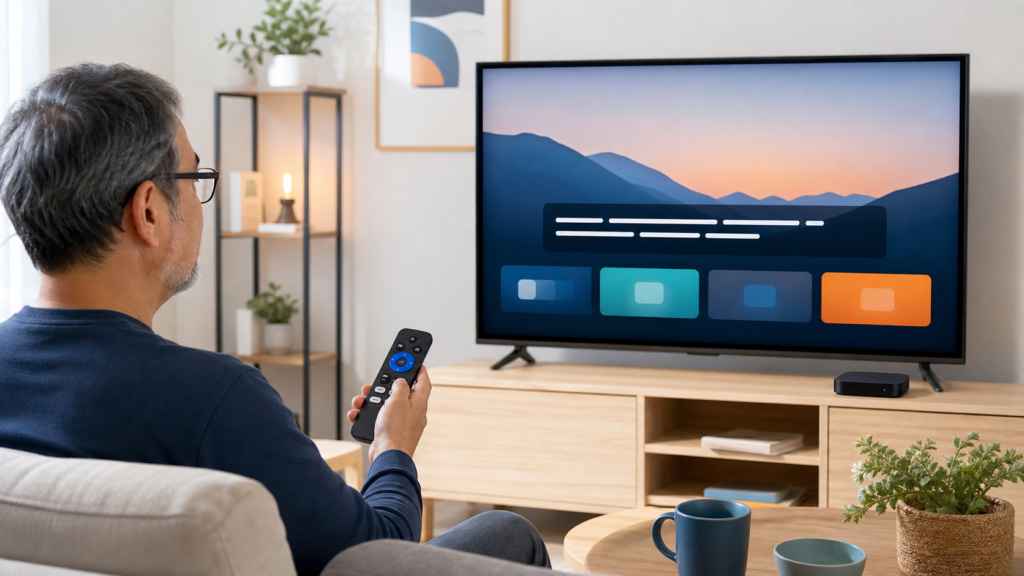
A high-contrast theme can make buttons and focus indicators easier to see. Color alone should not be the only way an interface communicates status, because different viewers see color differently. If the player offers a theme or contrast option, choose the clearest setting and verify that selected, unselected, and disabled controls remain distinct.
Remote navigation
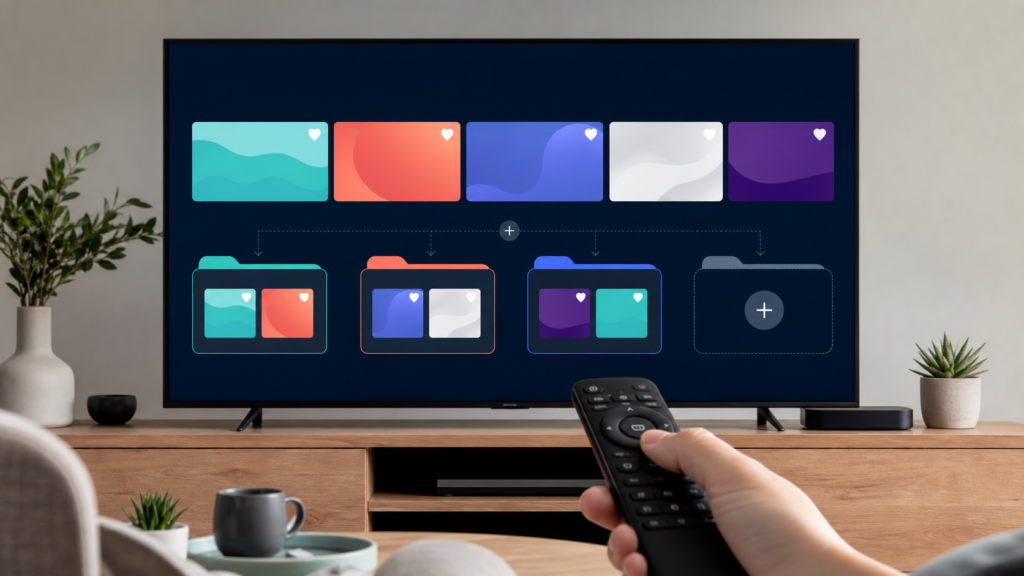
Remote-friendly navigation means fewer tiny targets, clear focus movement, and a predictable Back button. A short Favorites list can help more than a complicated customization. Our IPTV setup guide covers the basic device and player preparation that makes navigation easier.
How to improve IPTV accessibility step by step
Step 1: Start with the device accessibility menu
Open the TV or streaming device settings and look for Accessibility, Display, Audio, Captions, or Screen Reader options. Read the description before enabling a feature. A screen reader, magnification mode, or audio description can change how the remote behaves. If another person uses the TV, tell them what changed and how to switch it back.
Step 2: Configure subtitles in the player
Play content that is known to have a subtitle track, then open the playback controls. Choose the appropriate language and adjust size or background options if available. Test a light scene and a dark scene. A subtitle style that looks clear on one background may be difficult on another. If subtitles are missing only on one item, note the item and compare it with another title before changing the whole device.
Step 3: Simplify the home screen
Remove unused apps from the main screen where the device allows it, keep the IPTV player in a predictable position, and create a small Favorites list. Avoid cluttering the first screen with tools that are rarely used. The IPTV devices guide can help you compare the practical differences between a Smart TV, Firestick, and Android TV box.
Step 4: Make the remote easier to understand
Use a consistent place for the remote and label the most important buttons in a private household guide if needed. Focus on Home, Back, Select, Play/Pause, and volume. Do not cover buttons with tape if it makes the remote difficult to clean or identify. If a remote is regularly confusing, consider a simpler compatible remote only after checking device support.
Step 5: Test the full viewing path
Ask the intended viewer to complete the whole task: turn on the TV, choose the correct input, open the player, find a favorite, enable subtitles, pause playback, and return to the home screen. Observe where they hesitate. The best accessibility improvement is often removing one confusing step rather than enabling many advanced options.
What to do when subtitles or audio options are missing
First check whether the content item offers the track. Try another item in the same player. If subtitles work elsewhere, the issue may be content-specific. If subtitles fail everywhere, check the player settings, device accessibility settings, and the player version. Do not download unofficial subtitle files or unknown add-ons that ask for account credentials.
Audio descriptions and alternate audio tracks are also content-dependent. A player may display an audio menu even when only one track exists. Write down what the menu shows, the device type, and the player version before contacting support. The IPTV support hub can help you describe the issue without sharing private login information.
Common IPTV accessibility mistakes
Changing every setting at once
If text size, contrast, subtitles, and remote behavior all change together, it is difficult to know which setting helped or caused a problem. Change one setting, test it, and record the result.
Assuming the player controls the device
Some options belong to the TV operating system and others belong to the player. A player cannot always change the device font, and a device cannot create a subtitle track that the content does not provide.
Using unverified accessibility add-ons
Accessibility is important, but an unknown add-on can introduce privacy and reliability problems. Prefer built-in device settings and documented player features. Ask support about compatibility before installing anything.
Ignoring the viewing distance
Test the interface from the sofa, not only one foot from the screen. A setting that looks large on a phone may still be difficult to read on a TV, while extreme scaling may hide useful controls.
How accessibility relates to streaming quality
Accessibility settings generally affect how the interface is displayed, not the underlying network. If playback buffers, freezes, or fails to load, troubleshoot the network, device, and player separately using the IPTV buffering guide. Keep notes about whether the problem affects one item or everything, because that distinction helps support diagnose it.
When to ask for setup help
Ask for help when the device and player show conflicting menus, when a setting disappears after an update, when subtitles work on one device but not another, or when a remote cannot reach the player controls. Share the device, operating system, player, visible error, and non-sensitive steps already tested. TVMemberLink’s official WhatsApp and Telegram support buttons are available on the site. Never send passwords in a public group.
FAQ
Can every IPTV player display subtitles?
No. Subtitle support depends on the content, player, and device. Test a known supported item before assuming the entire setup is missing the feature.
Will larger text make the video larger?
Usually it changes menus and interface elements, not the video resolution. It can reduce the number of items shown on a screen, so test navigation after changing it.
Why are subtitles available on one device but not another?
The devices may use different players, versions, profiles, or display settings. Compare the content item, player, and settings before changing the subscription.
What is the simplest accessibility improvement?
Start with a short Favorites list, a readable interface size, and a clear remote path. Then add subtitles or contrast changes based on the viewer’s needs.
Final checklist
Choose device accessibility settings first, configure the player second, simplify the home screen, test from the normal seat, and record what changed. Keep credentials private and separate interface problems from playback problems. For plan and compatibility questions, review the IPTV pricing and subscription plans and contact official support.