Quick answer: The easiest way to organize IPTV favorites is to create a small list for the people and programs you actually watch, remove duplicates, and separate broad groups from personal Favorites. A tidy list makes a TV easier to use, reduces remote-control mistakes, and helps you spot whether a problem affects one stream or an entire playlist. The exact labels differ by player, but the organizing method is consistent.
Large playlists can be difficult to navigate on a television. Scrolling through every category is slow, especially when several household members use the same remote. A simple channel-group plan turns a long list into a predictable home screen. It also creates a useful troubleshooting reference: if one favorite fails while another works, the issue may be limited to a stream or source rather than the whole device.
What are IPTV favorites and channel groups?
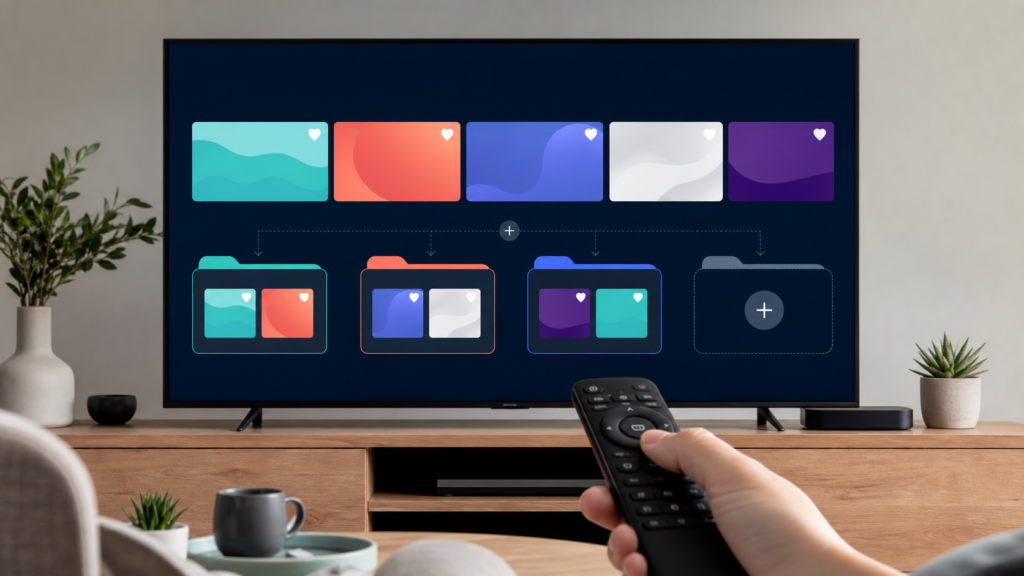
A channel group is a broad collection supplied by the playlist, such as a language, region, genre, or content type. Favorites are the items you deliberately pin for faster access. Some players let you create custom folders; others only provide one Favorites list. Do not assume that changing a local Favorites list changes the provider’s playlist. In most cases, it only changes how that device displays the information.
This distinction matters when a playlist refreshes. A provider may rename or remove an item, the player may re-sort categories, or a device may store favorites locally. Keep your list short enough to rebuild if necessary, and avoid using account credentials as folder names.
Plan your IPTV favorites before editing the player
Start with viewing intent
Ask who uses the TV and what they need to find quickly. A household might want a Family group, a News group, a Sports group, and a small Favorites list. The goal is not to save every available item. The goal is to reduce the number of remote presses between the TV home screen and the content you are authorized to watch.
Use consistent group names
Use short, descriptive names that make sense to everyone in the home. Avoid a long series of nearly identical labels. If multiple devices are used, keep the same naming pattern on each device even if the player uses different icons. A consistent method is more useful than a complicated one.
Check the player first
Look for settings such as Favorites, Groups, Edit, Add to favorites, Hide, Sort, or Manage categories. Some players let you move items with a remote; others work better with a companion interface. If you cannot tell whether an option is local or account-wide, ask support before making a large change. Our IPTV setup guide covers the general preparation steps.
How to organize IPTV favorites step by step
Step 1: Test the playlist before editing
Open a few items from the main list and confirm that the player can load the playlist. If the list is empty, categories are missing, or the player shows an authentication error, fix that first using the playlist troubleshooting guide. Editing a list while the underlying playlist is failing can make the problem harder to diagnose.
Step 2: Remove obvious duplicates from your view
Duplicates may appear because a playlist contains alternative streams, repeated categories, or multiple language labels. Do not delete anything from the provider account unless you understand the effect. Instead, hide or ignore duplicates locally if the player supports it. Keep at least one working entry for each item you need and test it before removing another.
Step 3: Build one short Favorites list
Add the items used most often, not everything that looks interesting. A small list is easier for a child, guest, or older viewer to understand. If your player supports folders, create only a few: for example, Family, News, Sports, and Other. The exact categories should match your household, not a template from another device.
Step 4: Put important items in a predictable order
Place the most-used items near the top. If the player supports manual sorting, use a stable order and document it. If it sorts automatically, do not fight the interface; create fewer favorites and rely on search or the original group structure for less frequent viewing. A predictable list matters more than a perfect list.
Step 5: Test after saving and restarting
Open several Favorites, leave the player, restart the device, and check the list again. This tells you whether the player saves the changes locally. If the list disappears, record the player version and device model before trying another edit. An update or profile change may be responsible.
How organized favorites help with IPTV troubleshooting
A clean Favorites list gives you a controlled test. If one item buffers while other favorites play normally, first note whether the issue is limited to that item. If every favorite buffers, check the network, device, and player. The IPTV buffering guide explains how to separate a single-stream problem from a wider home-network problem.
Favorites also help support understand the issue without asking for sensitive information. You can report the device, player, group, and visible error rather than sending an entire playlist or password. Keep screenshots cropped so account details are not exposed.
Common mistakes when managing channel groups
Saving everything to Favorites
A Favorites list with hundreds of entries is another long playlist. Start small and add items only when they are used repeatedly. Review the list monthly and remove items that no longer matter.
Changing the original playlist without a backup
If the player offers a destructive delete option, pause and confirm what it changes. Keep the original setup instructions and authorized account information in a private place. Never publish the playlist URL or credentials in a forum or group.
Assuming every device synchronizes
Favorites may be stored separately on a Firestick, Smart TV, Android TV box, or mobile device. Test each device individually. Our IPTV devices guide can help you decide where a dedicated player is most practical.
Using misleading labels
Do not rename an item in a way that promises a quality, resolution, or availability you have not verified. Use neutral labels and update them when the source changes. Clear labels are better for trust and support.
When should you contact support?
Contact support if a playlist loads but Favorites cannot be saved, if categories disappear after a refresh, if the same account behaves differently on two compatible devices, or if the player requests information you do not recognize. Include the player name, device, operating system, and the non-sensitive steps you tested. TVMemberLink’s support hub and official WhatsApp and Telegram buttons provide the appropriate next step.
FAQ
Can I create custom IPTV groups on every player?
No. Some players support custom folders, while others provide only a single Favorites list or the provider’s existing categories.
Will organizing Favorites improve streaming speed?
No. Organization improves navigation and testing, but it does not increase network speed or change the source stream.
Why did my Favorites disappear?
Possible causes include a profile change, app update, device reset, playlist refresh, or local storage behavior. Record the player and device details before rebuilding the list.
Should I send my playlist to support?
Usually no. Send the device, player, error wording, and non-sensitive troubleshooting steps. Never post passwords or private playlist URLs publicly.
Final checklist
Test the playlist first, build a short Favorites list, use a few clear groups, save changes, restart the device, and review the result. Keep credentials private and use the list as a troubleshooting aid. When you need a compatible setup or plan guidance, review the IPTV pricing and subscription information and contact official support.